From Island Under Siege to Seabird Sanctuary
What Lundy Teaches Us About Marion
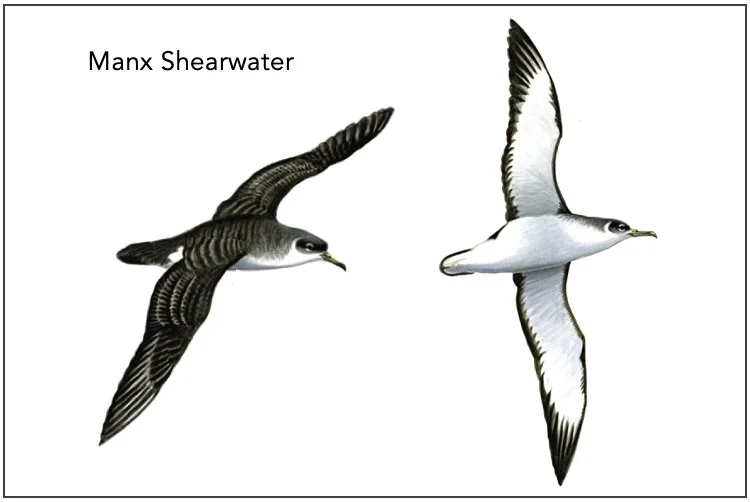
Today, over 25,000 pairs of Manx Shearwater nest on Lundy Island. Illustrations ©Peter Harrison.
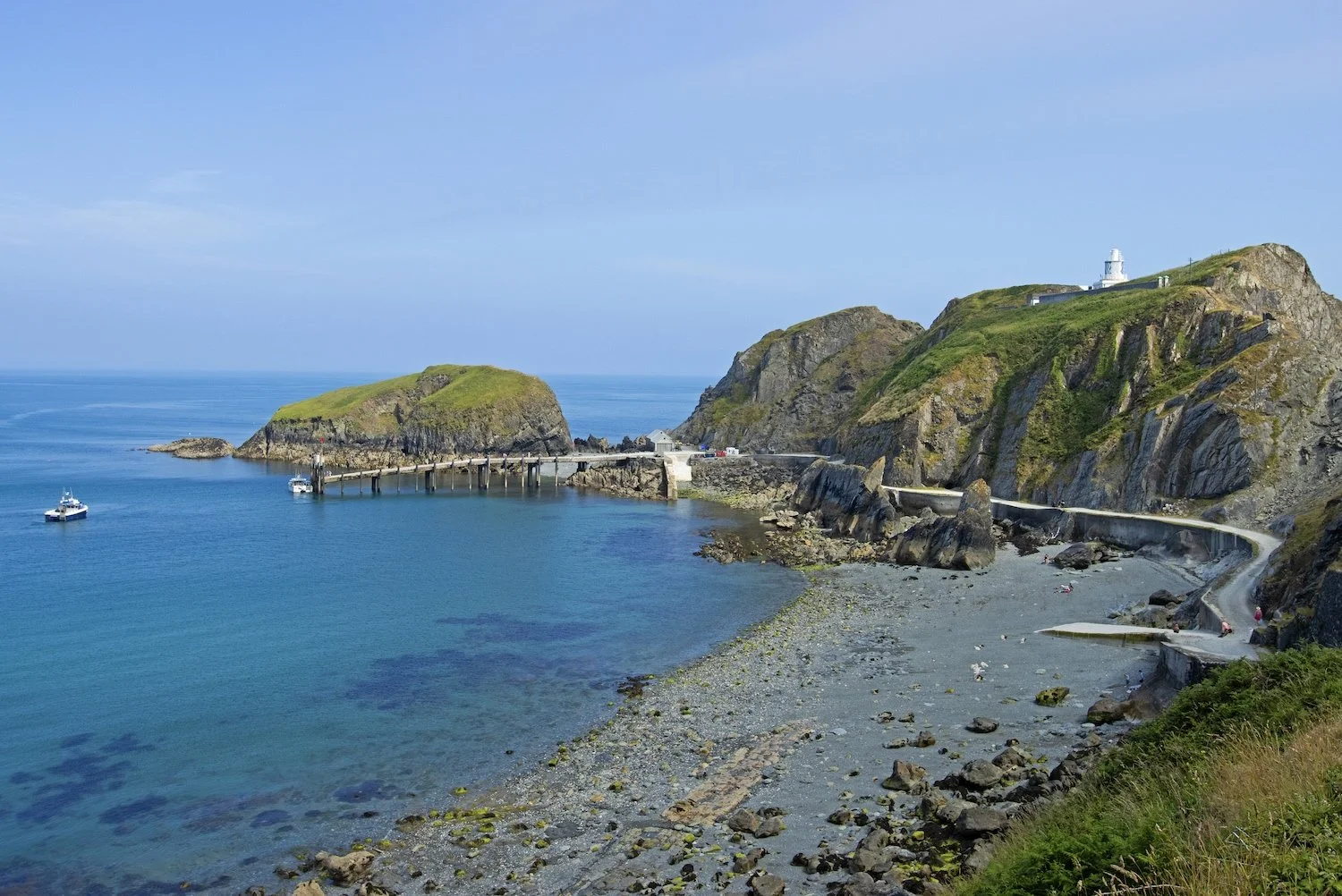
Lundy Island off the coast of North Devon, where the Atlantic ocean meets the Bristol Channel
Lundy Island lies in the Bristol Channel, twelve miles north of the United Kingdom's Devonshire coast. Until recently, few people had heard of it. Just three miles long, it has a lighthouse, grass-covered cliffs and a small hotel. The power goes out at midnight. There are no cars or roads and only 28 residents.
Once, tens of thousands of seabirds darkened its skies, especially burrow-nesting puffins and shearwaters that returned each spring to breed. The island offered a predator-free outpost at the edge of the fish-rich Western Approaches. That changed in the 1700s and 1800s, when Norwegian rats arrived accidentally and slowly took over. Seabirds that once numbered in the thousands dwindled to hundreds or tens. By the late 1990s, puffins had crashed to just 13 breeding pairs. Many seabirds abandoned their ancestral home. In 2002, a small band of local conservationists launched a rat-eradication project, and the last rat was seen in 2006. Twenty years later, puffins have increased from 13 pairs to more than 1,300 individuals, and over 40,000 seabirds now nest on Lundy's cliffs each year.
Visitors arrive by summer ferry for puffins, but the nocturnal Manx Shearwaters, another key breeder, matter more. Their numbers once fell below 500 pairs; now over 25,000 pairs nest here, more than 95% of England's breeders. They are trans-equatorial migrants: after breeding in the Northern Hemisphere, they head southwest to waters off Brazil and Argentina for the winter, leaving the colonies deserted from July to March. Like albatrosses and other tube-nosed species, Manx Shearwaters can live 50 years or more. During the 70-day chick-rearing period, adults fly vast distances for food, some over 1,000 miles. From my studio window at Lands End in Cornwall, I record them daily, sometimes in the thousands. Many come from Lundy, just 80 miles up the coast.
Rats and mice are perhaps the greatest predator challenge to seabirds today. Most were accidentally introduced during the whaling and sealing eras, and they easily prey on smaller burrow-nesting species. Newer "super mice," larger-than-life rodents, kill even adult albatrosses. On many islands, rodents destroy 80 percent of all eggs and hatched chicks. Habitat restoration therefore begins by removing them; seabirds then almost always return. Restoration is costly and can take years, and the bigger the island, the bigger the challenge. At Lundy, the rats were removed within a couple of years, and we now have two decades of a rat-free island.
If we can restore over 40,000 seabirds to one small island in the United Kingdom's Western Approaches, imagine what we can achieve on a so-called "Sleeping Giant" like subantarctic Marion Island: a partially submerged shield volcano, 15 miles long, 5 miles wide, about 30,000 hectares, and roughly 1,200 kilometers southeast of Port Elizabeth, South Africa. The Dutch vessel Maerseveen found it in 1663 without landing. Whalers and sealers visited repeatedly, introducing rodents. I first visited in 1976. Marion hosts 29 seabird species, roughly two million individuals, including five albatrosses: Wandering, Light-mantled, Dark-mantled, Grey-headed and Indian Ocean Yellow-nosed. Penguins include King, Gentoo, Macaroni and Eastern Rockhopper. Burrow-nesting petrels such as prions, diving petrels and pterodromas are also present. Half the world's breeding Wandering Albatrosses are thought to nest here. It sounds like a seabird paradise, but all is not well. With global warming and a lack of insects and plant-based food, mice have turned carnivorous and devour adult albatrosses. This is not sustainable. Nineteen of Marion's 29 seabird species face local extinction from these "flesh-eating super mice." Many of you know Marion's plight and have given time or funds, or both.
I consider the Marion Island mouse eradication project the most important conservation project on the planet today. Contact our team at info@peterharrisonseabirds.com to learn more about how you can help. Everyone can play a part. We must not and cannot fail.
An ocean without seabirds would be akin to a night sky without stars.